Future Flight and Energy

Aerothermal design and technology

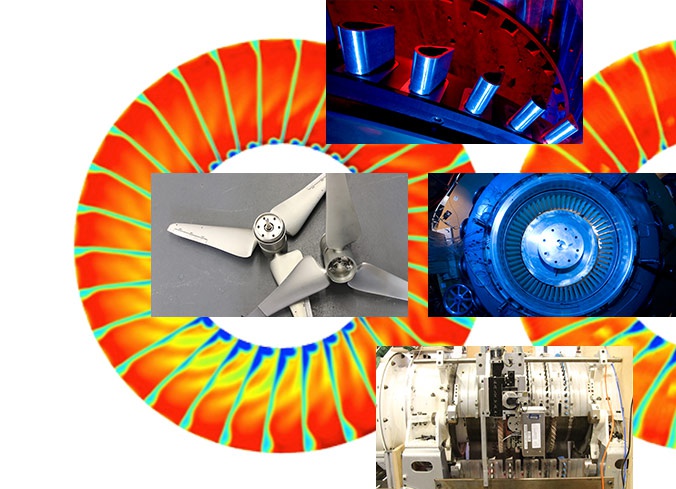
At the Whittle Laboratory we combine experimental and computational methods to determine the underlying physical mechanisms affecting turbomachinery performance. Most of our research projects involve a combination of computational simulation and experimental measurement; this combined approach is crucial for the study of the complex flows found in turbomachines.

A history of excellence and innovation.

The Whittle Laboratory was opened in May 1973 by Sir Frank Whittle and is a Research Group within the Energy Division of the Department of Engineering. The modern jet engines of today have developed from Whittle’s original design into highly efficient systems that can power huge aircraft for thousands of long-distance flights with minimal maintenance.

World-leading facilities at the heart of our research.

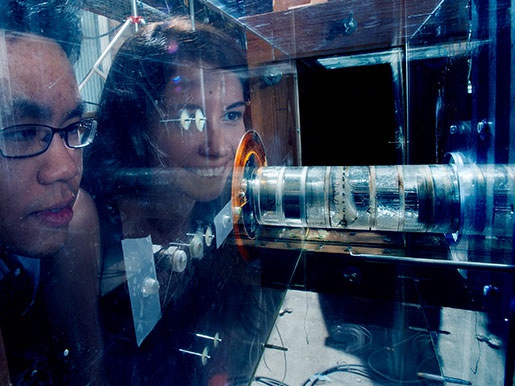
We use a wide range of facilities in order to determine and understand the key flow mechanisms which affect turbomachinery performance. Facilities range from low-speed (low Mach number) to high-speed (transonic and supersonic) cascade rigs, as well as several mid-scale and large-scale rotating machines.

Explore our Facilities

Academic and research staff.

The Whittle lab staff range from academic staff, research staff and fellows, PhD students and support staff. The lab also has a team of skilled technicians and significant manufacturing capabilities to support our experimental research work.

Meet our team

Collaborating organisations

Postal Address: 1 JJ Thomson Avenue, Cambridge CB3 ODY